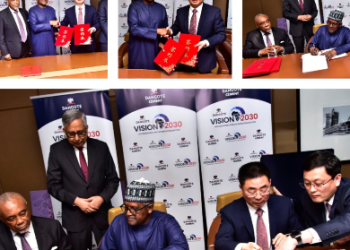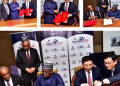



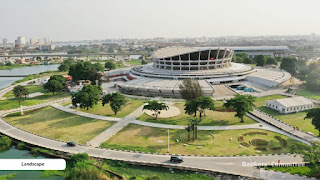
The iconic National Theatre in Iganmu, Lagos, is undergoing a historic rebirth as Access Bank, through the Bankers’ Committee, leads one of Nigeria’s most ambitious cultural infrastructure renewal projects, aimed at repositioning the country as Africa’s creative powerhouse.
Originally constructed between 1973 and 1976 ahead of the Second World Black and African Festival of Arts and Culture (FESTAC ’77), the National Theatre was conceived as a symbol of Nigeria’s cultural confidence and artistic excellence. Modelled after the Varna Palace of Culture and Sports in Bulgaria, the complex featured a 5,000-seat main hall, exhibition spaces, cinemas and advanced acoustics that made it one of the most sophisticated performance venues on the continent at the time.
For decades, the Theatre served as the epicentre of Nigeria’s cultural life, hosting landmark productions, international festivals, orchestral performances and major conferences. However, years of inadequate maintenance, abandoned concession arrangements and structural decline saw the once-proud monument fall into disrepair by the early 2000s, limiting its relevance in a rapidly evolving global creative landscape.
Recognising both the cultural loss and the economic opportunity, the Bankers’ Committee, with Access Bank playing a central role, initiated the comprehensive revitalisation of the National Theatre. The intervention is widely regarded as Nigeria’s largest cultural infrastructure project in recent history and a strategic investment in the country’s rapidly expanding creative economy.
Nigeria’s creative industries—spanning film, music, fashion, art, design and cultural tourism—now contribute significantly to national GDP and global visibility. Industry stakeholders have long argued that sustainable growth requires modern infrastructure capable of supporting world-class production, training and collaboration. The revival of the National Theatre is designed to meet that need while restoring a national icon.
The redevelopment is being executed in two phases. Phase One focuses on the restoration of the original Theatre structure, including upgrades to performance halls, cinemas, exhibition spaces, lighting, acoustics, seating, ventilation and accessibility, while preserving the building’s historic architectural identity.
Phase Two will deliver a state-of-the-art Creative Industries Park, featuring film and television studios, music recording facilities, fashion and design hubs, gaming and technology centres, photography studios, co-working spaces and creative academies. The facility is expected to support thousands of young creatives annually, enabling skills development, innovation and job creation.
Access Bank’s involvement reflects its long-standing commitment to Nigeria’s creative and cultural ecosystem. Over the years, the Bank has supported art, film, music, fashion and youth-focused initiatives, including partnerships with platforms such as ART X, as well as festivals, exhibitions and creative development programmes.
Industry observers describe the National Theatre revival as more than a renovation project, but a strategic economic and cultural intervention capable of attracting international collaborations, stimulating tourism and positioning Lagos as a leading African creative hub.
As Nigeria’s cultural exports—from Nollywood films to Afrobeats—continue to gain global traction, stakeholders agree that infrastructure remains critical to sustaining growth. The revitalised National Theatre is expected to serve as a launchpad for the next generation of Nigerian creatives.
By championing the transformation of the National Theatre, Access Bank has reinforced its role in Nigeria’s cultural renewal—bridging heritage and innovation, preserving history while building a future-ready creative economy.